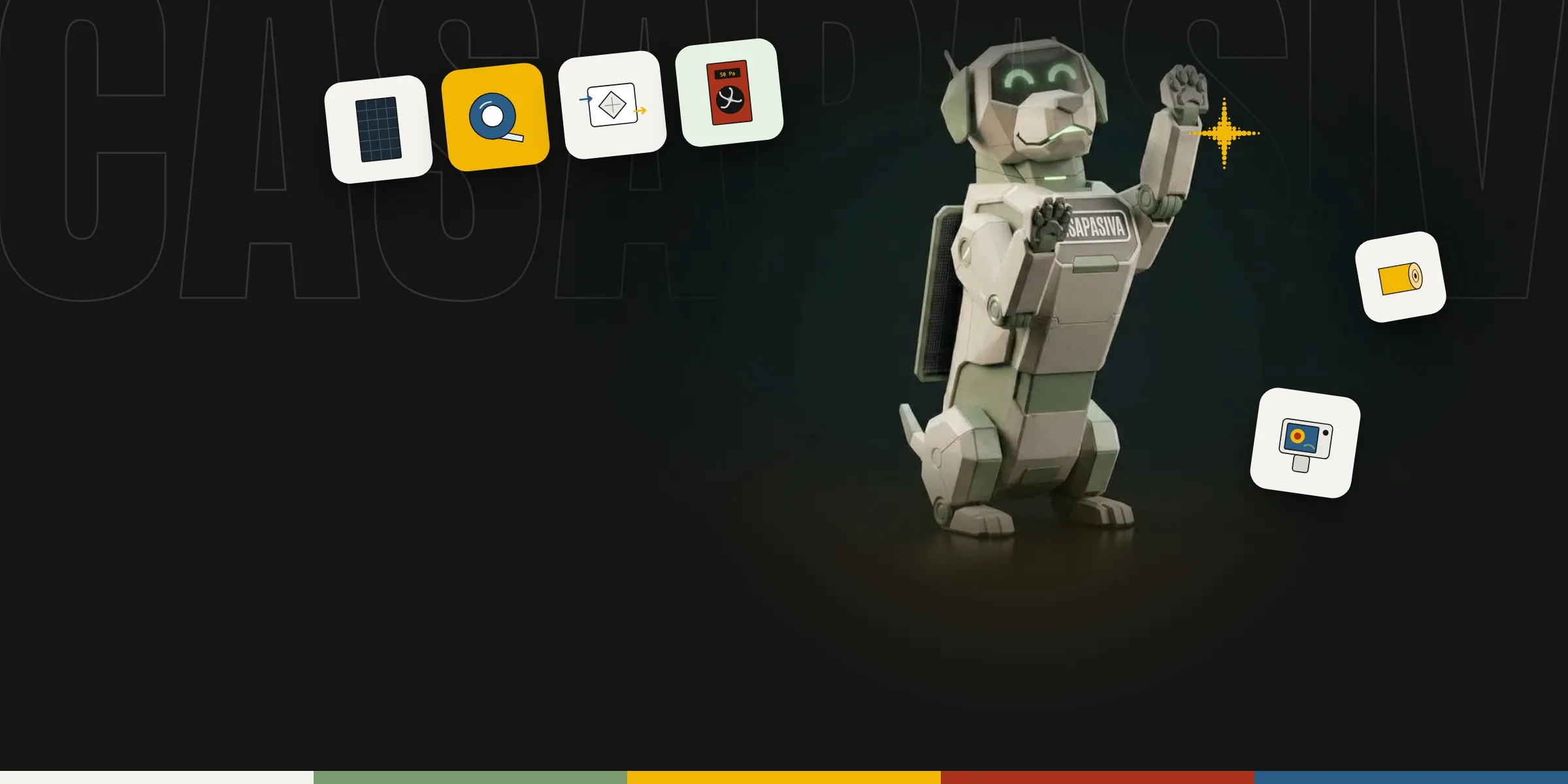
Casa Pasiva: Brand, Website, Marketing and Inbound Calls for an Energy Efficiency Store in Mexico
Brand, store, search marketing and an inbound order line for Casa Pasiva, an energy efficiency store in Mexico selling US-made building equipment in pesos.
Project Goals
Give a Mexican importer of passive-house materials and energy-saving equipment a brand people remember, a Spanish-first store that prices US products in pesos without manual updates, a search plan that reaches buyers already looking for this equipment, and a staffed inbound line where orders placed over WhatsApp and the phone get answered.
The Problem
In the US, someone building a passive house can order airtightness tape, an ERV or a blower door from a specialist supplier and have it the same week. In Mexico, most of that equipment isn't sold locally at all. Builders who want it end up on US websites, converting dollars in their head and guessing at freight, import duties and whether anyone will ship to Chihuahua.
Casa Pasiva set out to close that gap. It imports from US manufacturers and distributors and sells in pesos, with the import cost already in the price. It started as a one-page services site, though, and a one-page site can't sell 190 products. They needed four things from us: a brand, a store, a way for buyers to find it and someone to answer when buyers got in touch.
Branding
Energy efficiency brands tend to look alike: green leaves, blue gradients, a stock photo of a smiling family. Casa Pasiva sells tape, membranes and diagnostic equipment to builders, so we gave it a brand that looks like it belongs on a job site.
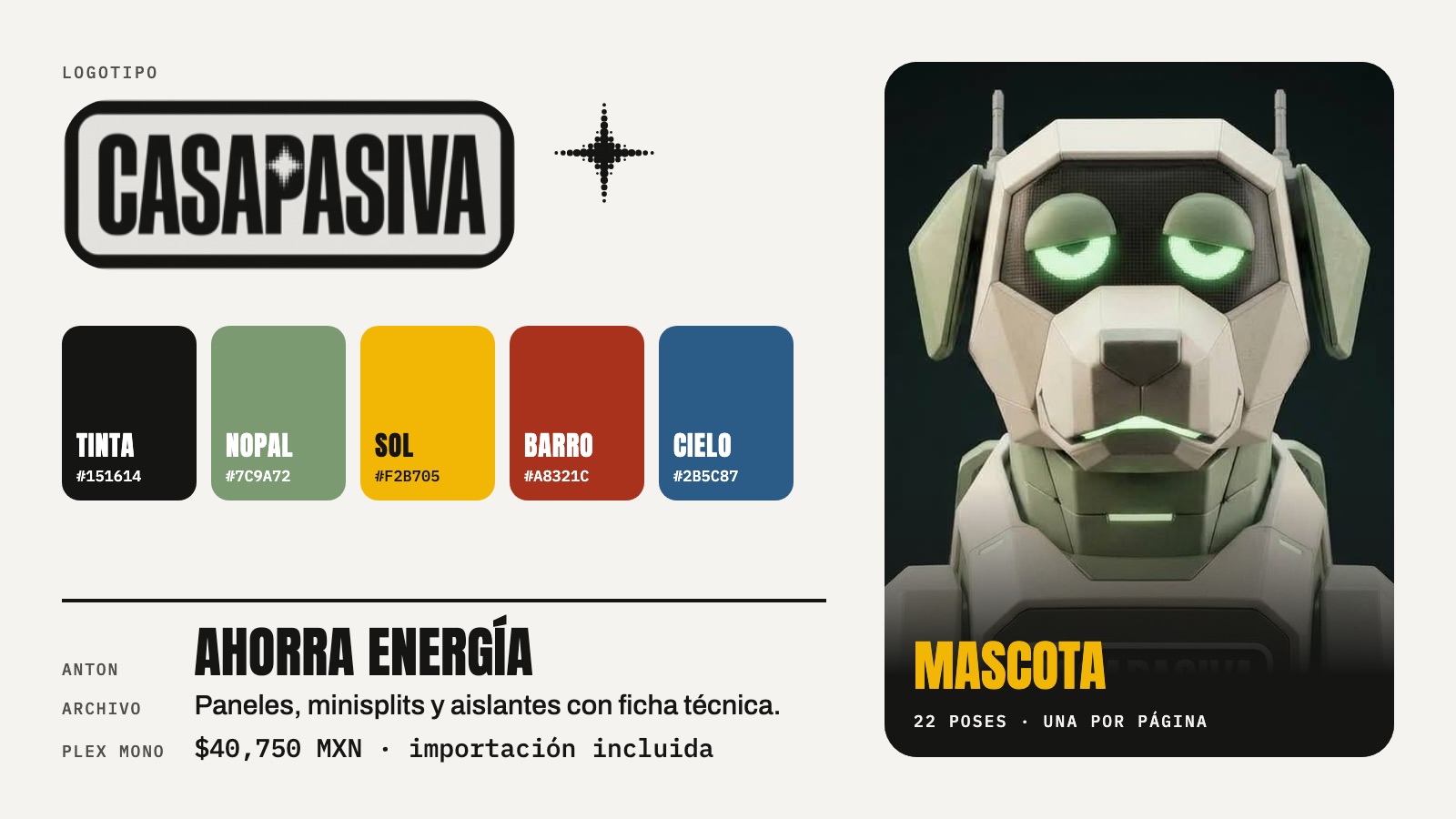
A loud wordmark. "CASAPASIVA" is set in Anton, a tall condensed typeface, inside a heavy frame. It reads at the size of a favicon and on the side of a box. Headlines use the same face. Body copy is in Archivo, and specs and prices are in IBM Plex Mono, so numbers read like a data sheet rather than marketing.
A palette named after Mexico. The colours are tinta (ink black), nopal (cactus green), sol (sun yellow), barro (clay red) and cielo (sky blue), on a warm off-white. Yellow is reserved for the main action on each page, so buyers learn where to click.
A mascot with a job. We designed a robot dog with the wordmark on its chest plate and drew it in 22 poses: waving, running, confused, looking at the moon. Each page draws its dog from a separate pool for the hero, the closing banner and the footer, so the same pose never appears twice on one page. The dog gives a technical catalogue a character people remember, and the confused pose makes the 404 page friendlier.
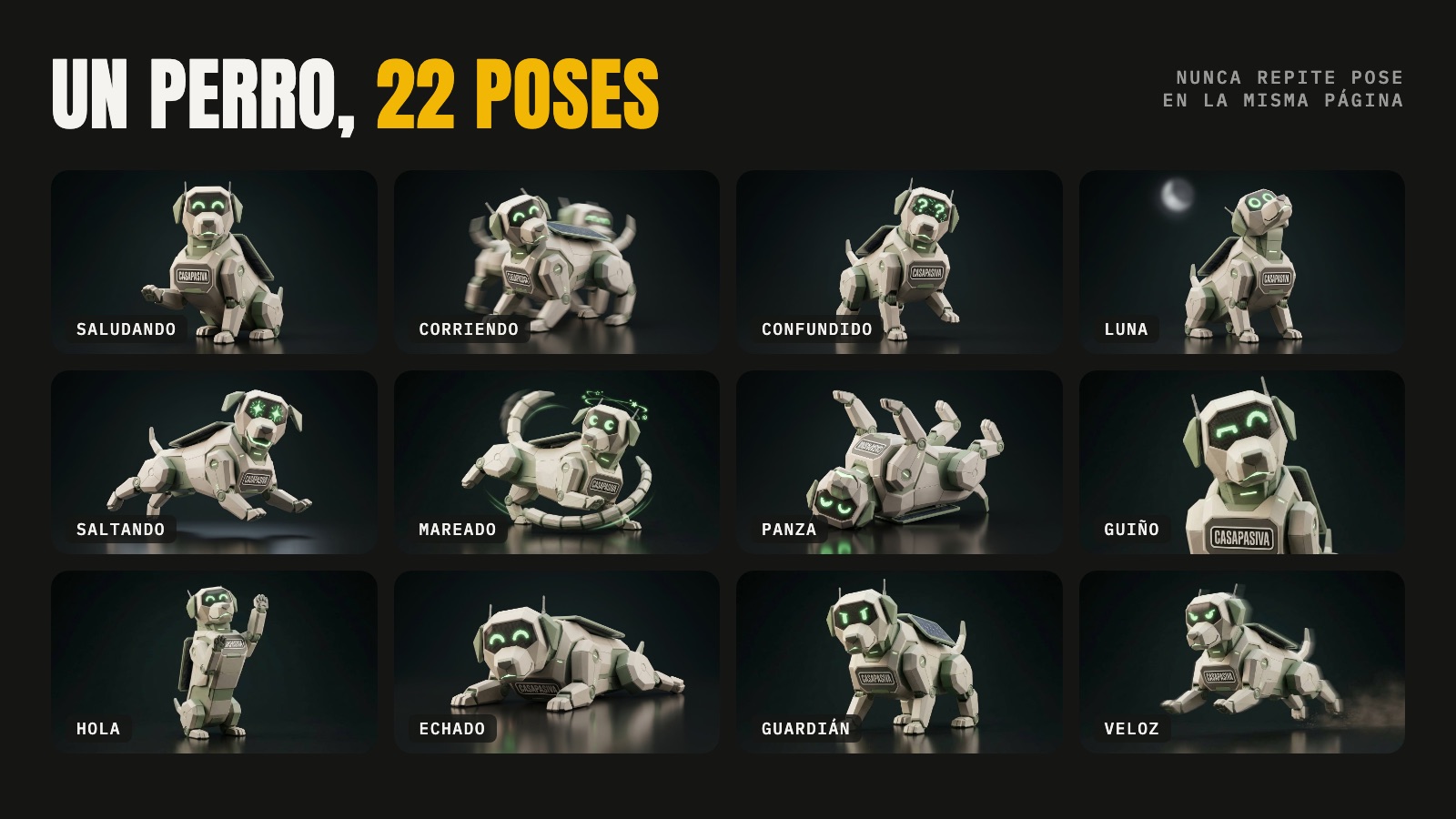
We built the brand as a set of page templates first, including the home page, category, product, search, compare, solar quote tool, guides, help and about. The client approved the store as a design before we built any of it.
The Website
A store, not a brochure. The site follows the pattern of the best US building-science suppliers, in Spanish. It has a store hub, then category pages with a brand filter, sorting and a tray for comparing products side by side. Each product page has a full spec sheet. Search covers the whole catalogue, and the homepage leads with the numbers: 190 products in 31 categories.
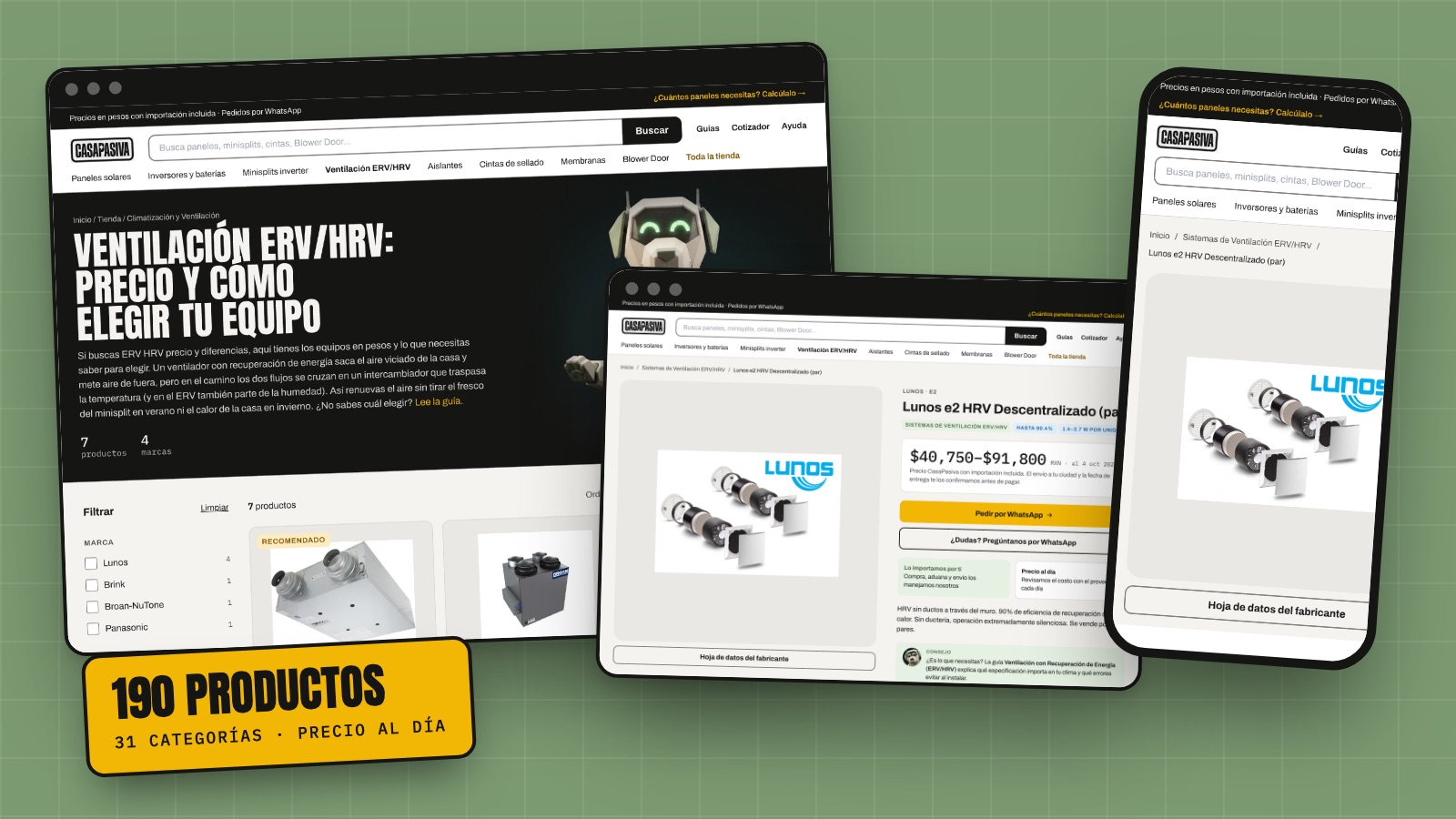
Prices that keep themselves current. Every morning at 5:00, Mexico City time, an automated job checks each product's US suppliers for price and stock. It takes the cheapest offer that's in stock, converts it at that day's exchange rate and adds the import cost. Then the site rebuilds. Buyers see a peso price marked "importación incluida" and the date it was confirmed. Products that are out of stock everywhere are tagged as sold out. Supplier names and dollar costs never appear on the page.
Orders over WhatsApp. Mexican buyers ask before they pay, especially for imported equipment. Instead of a checkout, every product has a "Pedir por WhatsApp" button. It opens a message already filled in with the product, price, quantity and page link, and it asks for the buyer's city and postcode, which is what's needed to quote shipping. Each tap is tracked in Google Analytics 4 as an order event.
Tools that start the sale earlier. A solar quote tool estimates savings from the buyer's CFE electricity tariff and points to the right panels. Buying guides answer the first question, such as how many panels you need or what an ERV is, and link to the matching category.
Services without overpromising. Casa Pasiva sells equipment, not installation. Pages on blower door tests, thermography, sealing and certifications such as Passivhaus and LEED explain what each service involves. They then offer two routes: a local specialist from a map of all 32 states, or free remote help with sizing. We wrote rules into the copy so that no page claims Casa Pasiva does on-site work.
The client's team edits products, guides and specialists through a CMS, without touching code.
Marketing
One page, one phrase. The site has about 12,700 pages: products, categories, guides, standards, and service pages for every state and city. We assigned each indexable page a single Spanish search phrase and checked that no two pages compete for the same one. Category pages target buying phrases ("cámara termográfica precio"), and guides target learning phrases ("cómo elegir una cámara termográfica"), so the two don't cannibalise each other.
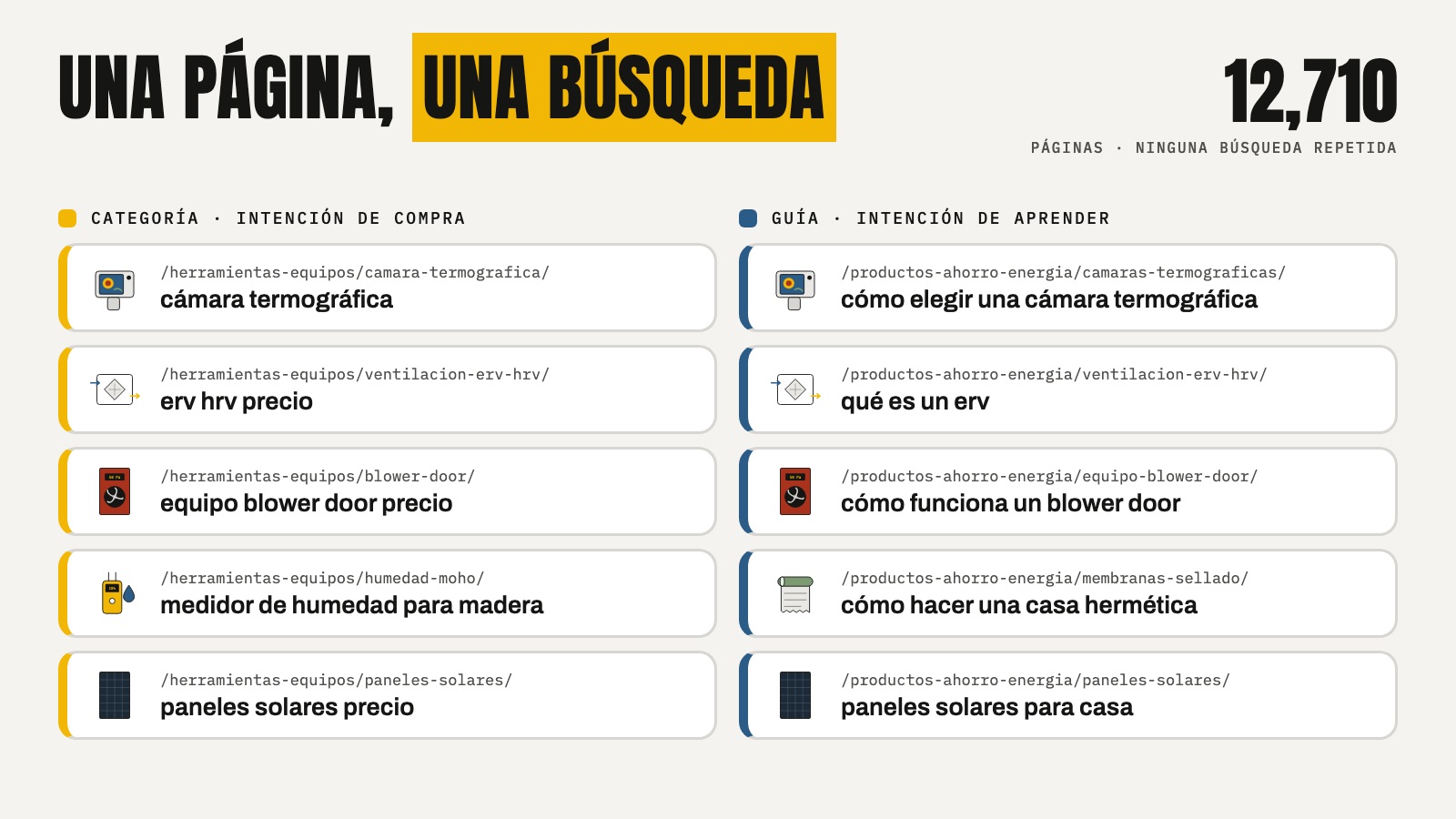
Start from the demand that already exists. Sixteen months of Search Console data showed where Google already associated the site with real Spanish searches, such as wood moisture meters, thermal cameras, CFE solar interconnection and ERVs. Those pages ranked too low to earn clicks, so they came first. For the 50 priority pages, we measured the pages already ranking for each phrase and rewrote ours to cover the subject more thoroughly, then checked every page for originality against those competitors.
Cut what doesn't earn its place. The data also showed that most service-by-city pages attracted the wrong searches. In Mexico "clima" means weather as well as air conditioning. We recommended removing roughly 6,000 thin city pages from the index and keeping the solar city pages that do bring in local searches. That concentrates ranking signals on the pages that sell.
Inbound Call Center
A store that takes orders by message needs someone who answers. The WhatsApp number and phone line on every page go to our inbound call center team.
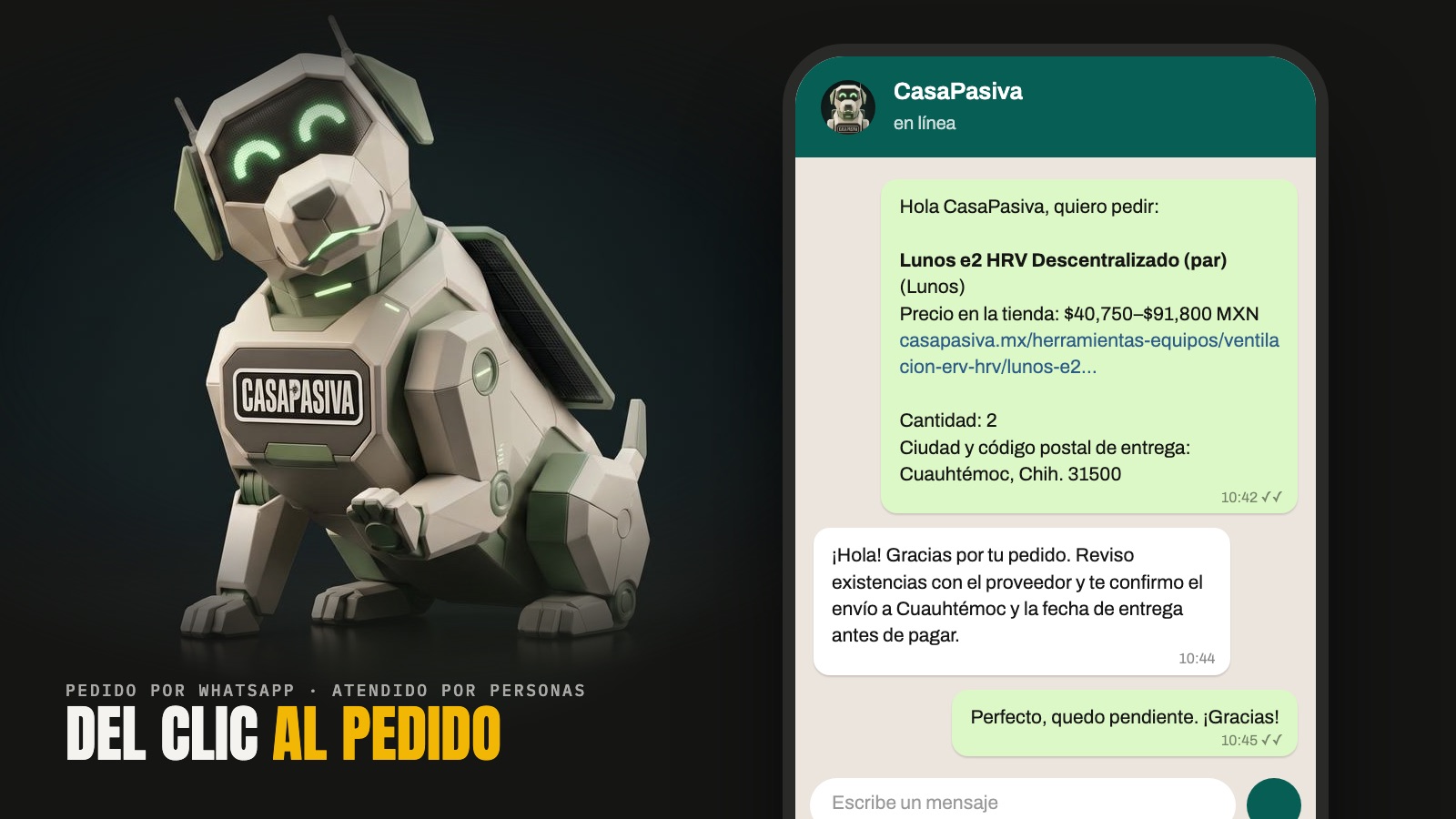
Agents take orders from the pre-filled WhatsApp messages and confirm stock and shipping to the buyer's city. They also answer sizing questions about panels, minisplits and ventilation. When a buyer is planning a project rather than buying a product, the agent connects them with the state specialist or with remote help. Website form leads go to a shared sheet the same team works from, so a call and a web enquiry from the same builder end up in one place.
Why It Works
Each piece depends on the others. The brand makes a technical catalogue memorable, and the store gives search traffic somewhere to land. The search plan sends buyers who already know what they want, and the inbound line turns their messages into orders. Without any one of them, the others would stall: a strong brand with no store sells nothing, and a store with no one answering WhatsApp loses its buyers at the last step.
Casa Pasiva now runs as an import business, with prices that update themselves, a brand people recognise and a line that someone answers.
Launching a store in Mexico? Let's talk →
See more of our work View case studies →
Like what you see?
Tell us what you're building and we'll tell you how we'd approach it.
Start a project